

What Is AI Trust Risk?
AI trust risk is the potential for an AI system to erode stakeholder confidence in the technology itself and in the organization deploying it. This erosion can stem from biased training data, flawed or opaque decision-making, lack of transparency in how outputs are produced, or uses of AI that violate ethical or legal expectations. When trust breaks down, it carries real consequences: regulatory scrutiny, reputational damage, and loss of user confidence.
See how building transparent, accountable AI systems helps organizations maintain stakeholder trust at every stage.
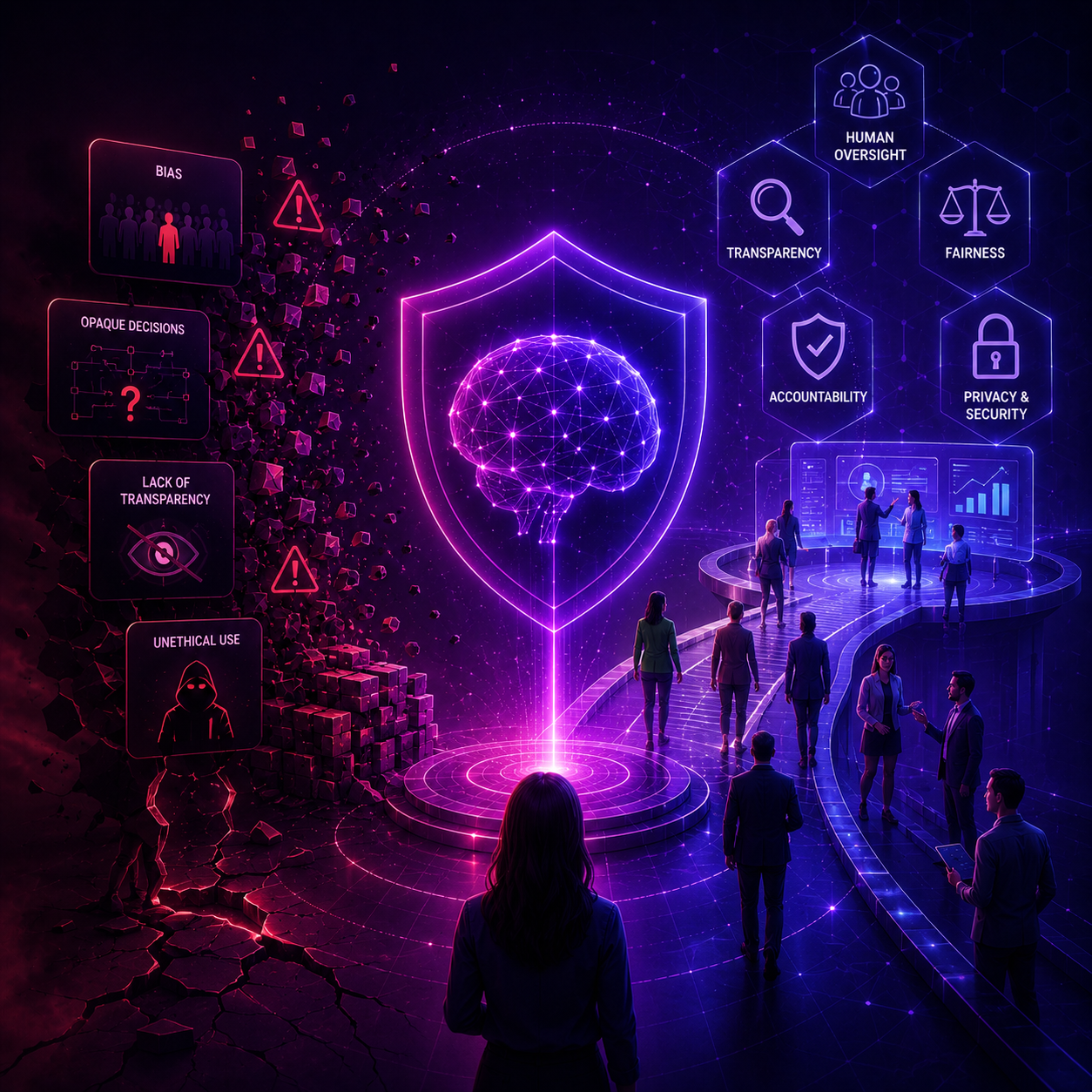
Key Sources of AI Trust Risk
AI trust risk doesn't come from a single point of failure. It accumulates across the lifecycle of an AI system, often in invisible ways until something goes wrong. The most common sources fall into four categories.
- Biased or unrepresentative training data - AI systems learn from historical data. If that data reflects past discrimination in hiring, lending, healthcare, or elsewhere, the model will likely reproduce and amplify those patterns, even without any intent to do so. Bias in the data is one of the most common and consequential sources of trust risk.
- Opaque or unexplainable decision-making - Many AI systems, particularly complex machine learning models, don't produce outputs that can be easily explained. When a person is denied a loan, rejected from a job application, or flagged by a fraud detection system, the inability to explain why creates a serious trust deficit for the individual affected, for regulators, and for the public.
- Unethical or unlawful use of AI - Trust risk also arises when AI is applied in ways that cross ethical or legal lines, such as using AI for discriminatory profiling, violating data privacy rights, or deploying systems in high-stakes contexts without appropriate human oversight. For a closer look at how third-party AI tools introduce additional layers of this risk, see why third-party AI risk is one of the hardest governance problems to solve.
Why AI Trust Risk Matters
Trust is foundational to how AI gets adopted, accepted, and sustained inside organizations and beyond them. When an AI system loses the confidence of its stakeholders, users, employees, regulators, or the public, it doesn't just create a reputational problem. It creates a structural one.
- For organizations: trust risk translates into direct business impact. Systems that produce biased outcomes can trigger regulatory investigations and fines. Unexplainable decisions can generate legal challenges. Poorly governed deployments can surface in the press, damaging customer relationships and brand equity. High-profile failures in AI deployment have already shown how quickly trust can be lost, and how slowly it is rebuilt.
- For individuals: trust risk has human consequences. When an AI system makes a consequential decision about someone's finances, health, employment, or safety, that person has a legitimate interest in understanding and contesting that decision. If the system is opaque, biased, or operating outside ethical norms, the individual bears the cost.
- For regulators and policymakers: AI trust risk is precisely why frameworks like the NIST AI Risk Management Framework have been developed. These frameworks codify what responsible AI deployment looks like and provide organizations with structured ways to identify, measure, and reduce trust risk before harm occurs.
Understanding what drives trust risk is, in many ways, the foundation of AI governance itself, and one reason that understanding what AI governance actually is and isn't is an important starting point for any organization deploying AI at scale.
Real-World Examples of AI Trust Risk
Seeing how trust risk shows up in practice makes the concept concrete.
- Hiring and recruitment tools - Automated resume screening and candidate ranking systems have faced scrutiny for producing outcomes that disadvantaged certain demographic groups. In several well-documented cases, AI systems trained on historical hiring data learned to replicate patterns of exclusion. The result: real harm to job seekers and significant reputational and legal exposure for the organizations involved.
- Financial services and lending - AI-driven credit scoring models have been shown to produce disparate outcomes across racial and socioeconomic lines in some deployments, even when race is not an explicit input variable.
Summary
AI trust risk is the potential for an AI system to erode stakeholder confidence through bias, opacity, unethical use, or lack of transparency. It operates across the full lifecycle of an AI system and carries real consequences, legal, reputational, and human. Managing it requires structured governance: ongoing assessment, clear accountability, meaningful transparency, and an approach to responsible AI that treats trust as a design requirement, not an afterthought.
Frequently Asked Questions
Here you can find the most common questions.
What is the difference between AI risk and AI trust risk?
AI risk is a broad term covering any potential harm an AI system can cause, including technical failures, security vulnerabilities, or compliance gaps. AI trust risk is a specific subset focused on the loss of stakeholder confidence due to bias, opacity, or unethical use.
What causes AI systems to lose stakeholder trust?
The most common causes are biased training data, decisions that can't be explained, lack of disclosure about how AI is used, and deployments that violate ethical or legal expectations. Each of these erodes confidence in both the technology and the organization behind it.
How do organizations measure or assess AI trust risk?
Organizations typically assess trust risk by evaluating model fairness, explainability, transparency practices, and regulatory alignment. This is often done through structured risk assessments and governance frameworks like the NIST AI RMF.