

Human-Centered AI
Human-Centered AI is an approach to developing, deploying, and using artificial intelligence systems that prioritize human needs, values, and experiences. It ensures that AI enhances human capabilities, supports better decision-making, and improves overall well-being while remaining transparent, explainable, and ethically aligned. By focusing on people first, organizations can build AI systems that are more intuitive, inclusive, and impactful.
In simple terms, it is a framework where humans and AI work together seamlessly, making technology more accessible, trustworthy, and responsive, helping organizations create solutions that are effective, responsible, and widely adopted.
.png)
How Human-Centered AI Works
Human-Centered AI integrates human input throughout the AI lifecycle:
- User Research and Design: Human-Centered AI begins with understanding the people who will use or be affected by the system. This includes identifying user needs, expectations, pain points, and real-world contexts before development starts.
- Development and Testing: During development, AI systems are built with a focus on usability, fairness, transparency, and safety. Testing helps identify bias, confusing outputs, and design issues that could negatively affect user trust or experience.
- Deployment: When deployed, Human-Centered AI must be accessible, reliable, and easy to use in real-world environments. The goal is to ensure the system supports users effectively without creating unnecessary complexity or confusion.
- Feedback and Iteration: User feedback plays an ongoing role after launch. Organizations continuously refine AI systems based on how people interact with them, making improvements to performance, usability, and responsiveness over time.
- Monitoring and Governance: Human-Centered AI requires continuous monitoring to ensure it remains aligned with ethical, legal, and operational standards. Governance practices help organizations manage risk, maintain accountability, and adapt systems as needs evolve.
Why Human-Centered AI Is Important
AI systems are powerful, but without a human-centered approach, they can become misaligned with user needs or societal values. Human-Centered AI helps bridge this gap by ensuring systems remain useful, fair, and accountable.
- Enhances User Experience: AI systems are designed to be intuitive, accessible, and aligned with how people think and interact.
- Builds Trust and Transparency: By making AI explainable and understandable, users are more likely to trust and adopt it.
- Aligns with Human Values: Ensures AI decisions reflect ethical considerations, fairness, and societal norms.
- Improves Decision-Making: AI augments human judgment rather than replacing it, leading to better outcomes.
- Promotes Inclusivity and Accessibility: Considers diverse user needs, ensuring technology benefits a broader audience.
Key Principles of Human-Centered AI
Human-Centered AI is built on several foundational principles:
- Transparency: Systems should clearly communicate how decisions are made.
- Explainability: Users should be able to understand AI outputs.
- Trustworthiness: AI should behave reliably and predictably.
- Fairness: Systems must avoid bias and discrimination.
- User Involvement: Stakeholders are actively included in design and feedback processes.
Objectives of Human-Centered AI
Human-Centered AI aims to create a balanced relationship between humans and machines.
- Enhance human capabilities and productivity
- Ensure ethical and responsible AI usage
- Improve user trust and adoption
- Support inclusive and accessible technology
- Align AI systems with human values and societal needs
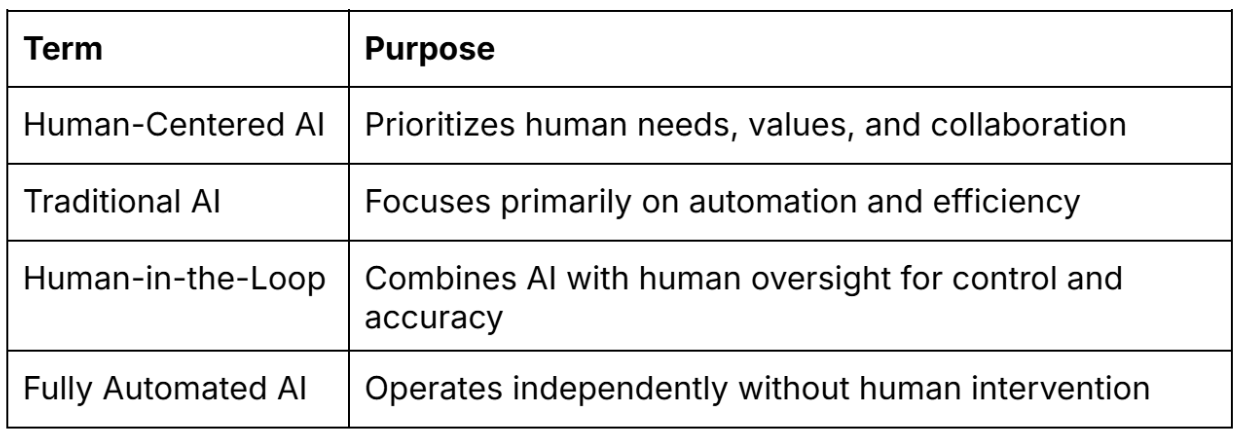
Human-Centered AI vs Traditional AI
Benefits of Human-Centered AI
Human-Centered AI provides significant advantages for organizations:
- Better User Adoption: Systems designed around users are more widely accepted.
- Improved Outcomes: Combining AI insights with human judgment leads to better decisions.
- Reduced Risk: Ethical and transparent systems minimize unintended consequences.
- Stronger Trust: Users are more confident in systems they understand.
- Long-Term Sustainability: Aligning AI with human values ensures responsible innovation.
Why Human-Centered AI Remains Essential
As AI continues to evolve, focusing solely on automation can lead to systems that are difficult to trust or control. Human-Centered AI ensures that technology remains aligned with human goals, ethical standards, and real-world needs.
Without this approach, organizations risk building systems that may be efficient but lack fairness, transparency, and usability. Human-Centered AI ensures that innovation remains responsible, inclusive, and beneficial to society.
Summary
Human-Centered AI focuses on designing AI systems around human needs, values, and experiences. It promotes transparency, fairness, explainability, accessibility, and trust. By involving users across design, testing, deployment, feedback, and governance, organizations can build responsible AI systems that support better decisions, reduce risk, and improve adoption.
Frequently Asked Questions
Here you can find the most common questions.
What is Human-Centered AI in simple terms?
Human-Centered AI is an approach to building AI systems around human needs, values, and experiences. It ensures AI is useful, understandable, and designed to support people effectively.
How is it different from Human-in-the-Loop?
Human-Centered AI is a broader design approach focused on usability, ethics, and trust. Human-in-the-Loop specifically refers to people actively guiding, reviewing, or validating AI decisions.
Why is Human-Centered AI important?
It is important because it improves trust, fairness, and usability. By aligning AI with human values, organizations can build solutions that are more responsible, effective, and widely adopted.