



Read the law the way a regulator will.
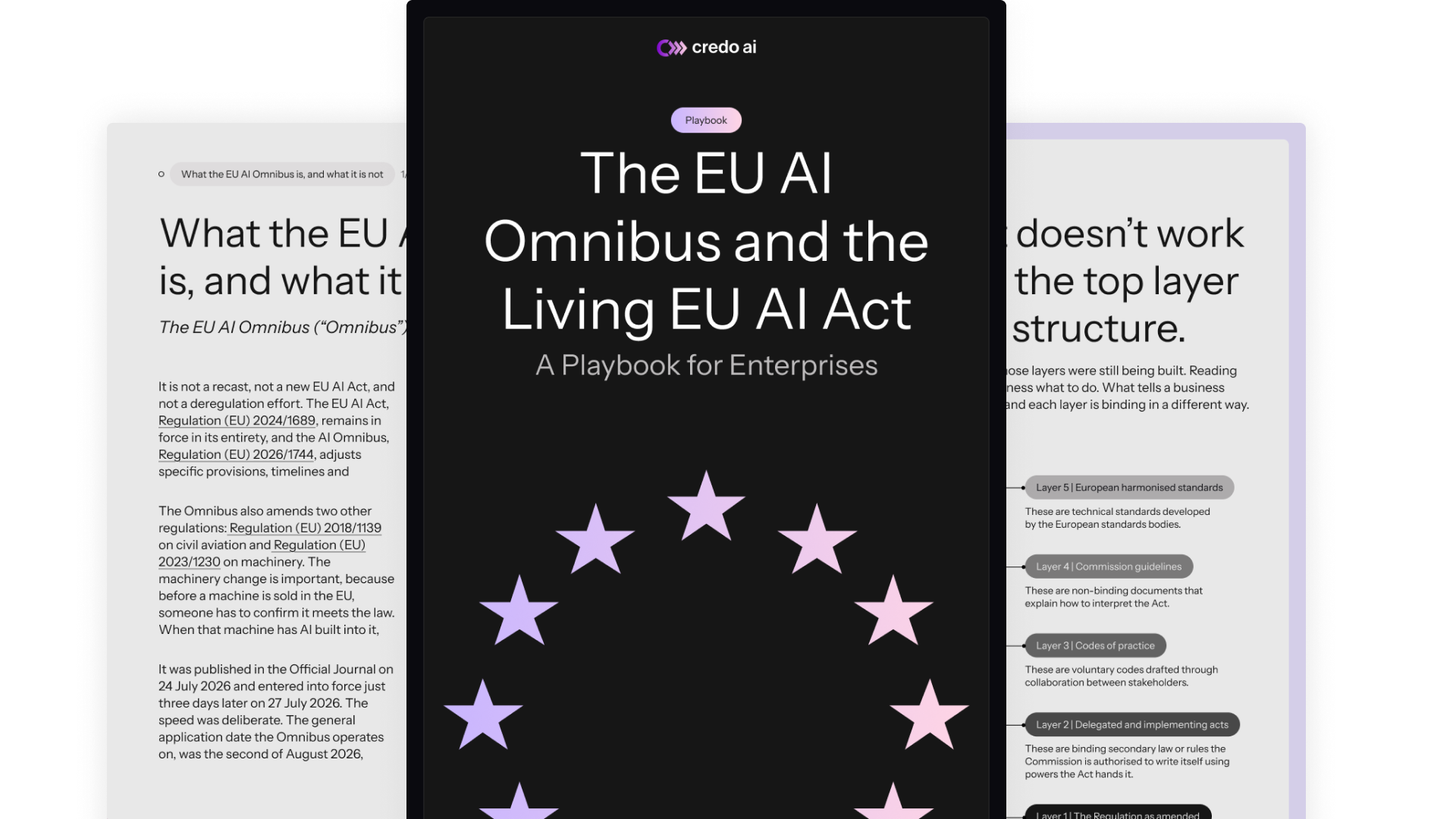
The EU AI Omnibus Playbook maps what changed, what didn't, and what your organisation owes on every date.


The Omnibus entered into force on 27 July 2026 and adjusts specific timelines and mechanisms inside the EU AI Act, which remains fully in force. The headline change: the largest compliance deadlines moved to 2 December 2027 (stand-alone high-risk systems) and 2 August 2028 (AI built into regulated products). The headline everyone missed: not a single core obligation changed, and new duties still arrived in 2026. Transparency requirements and the Commission's power to fine model providers went live on 2 August, and two new prohibitions follow on 2 December, at penalties up to €35M or 7% of worldwide turnover.
Relief and exposure arrived in the same week. Most coverage attended only to the first. This playbook is for the people who have to account for both; to a board, to a regulator, or to the teams building and deploying AI.
Everything you need to know about what the Omnibus changed, what it left untouched, and why the "conditional delay" you've read about doesn't exist in the adopted law.
The playbook includes every application date and institutional deadline from February 2025 to December 2030, including the 2026 obligations most enterprises are missing right now.
The playbook breaks down obligations by actor: high-risk providers, GPAI model providers, deployers, SMEs, importers and distributors, and the new enforcement reality attached to each.
Six judgments you can state in a meeting and defend under scrutiny, converted into an action checklist by horizon, with ownership assigned.
We set the standard for trusted AI — thoughtfully. Join the enterprises achieving Measurable Trust across agents, models, and applications.



The trusted leader in AI governance. Helping enterprises govern agentic AI systems at scale.